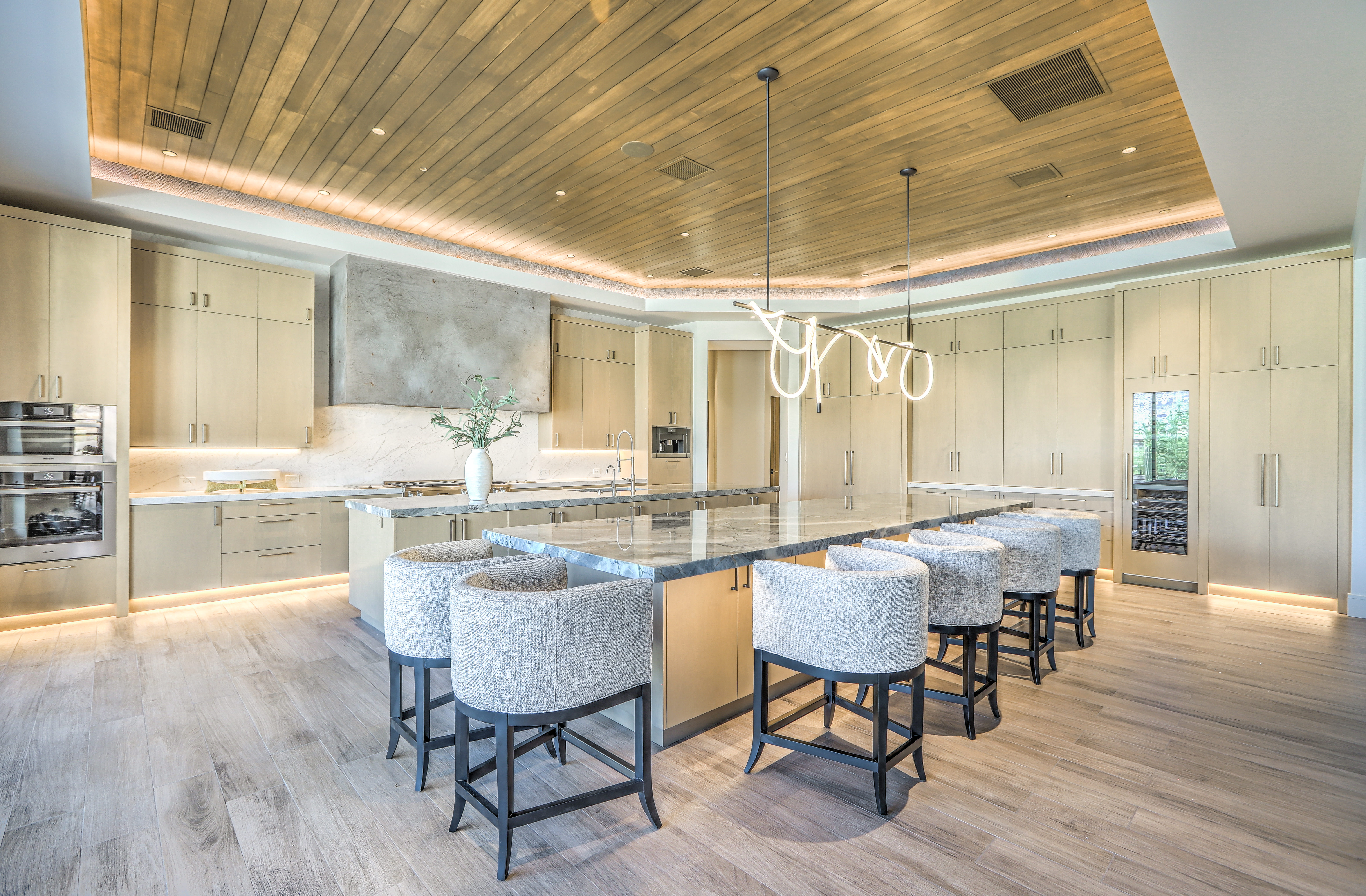
Clients increasingly ask what the sustainable option is. The honest answer is that it is less about choosing one green material and more about three separate decisions: what the panels emit, where the wood came from, and how long the kitchen will last before someone rips it out.
Emissions from the panels
Most cabinet boxes are engineered panel, and the adhesives in that panel are where indoor air quality is won or lost. Look for low or no added formaldehyde panel products. This matters most in a tightly sealed, heavily air-conditioned home, which describes most new construction here.
Where the wood came from
Certified sourcing means the hardwood in your doors came from a forest being managed rather than cleared. It is a straightforward question to ask and a straightforward one for a manufacturer to answer.
Longevity is the real sustainability
A kitchen that gets replaced in eight years because the boxes failed or the layout never worked is not a sustainable kitchen, whatever it was made of. Solid construction, a timeless door style and a layout planned around how you actually live will keep a kitchen in service for decades. That single factor outweighs most material choices.
Practical options we carry
Between certified hardwoods, low-emission panel products, water-based finishes and long-warranty hardware, it is entirely possible to build a kitchen that performs well on all three counts without it becoming a compromise on how it looks. Ask us for the specification sheets and we will show you what each line actually uses.