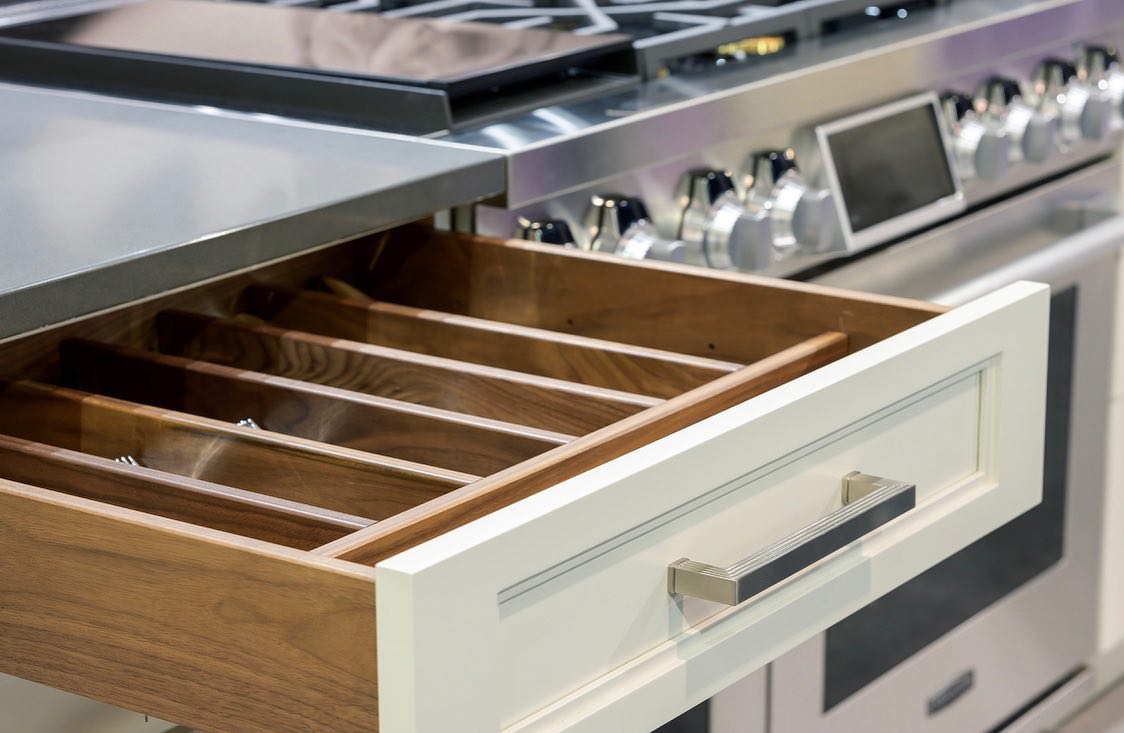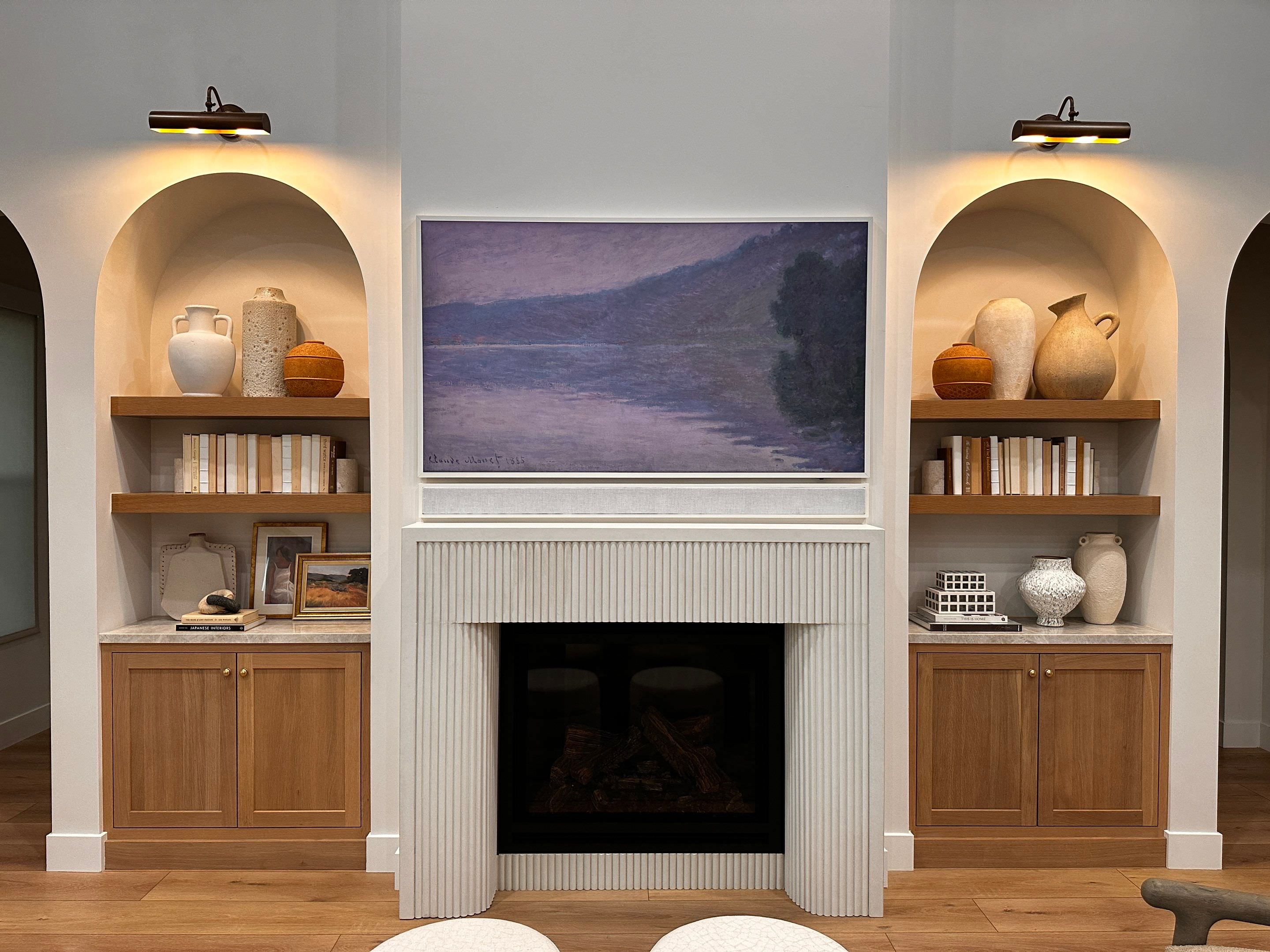
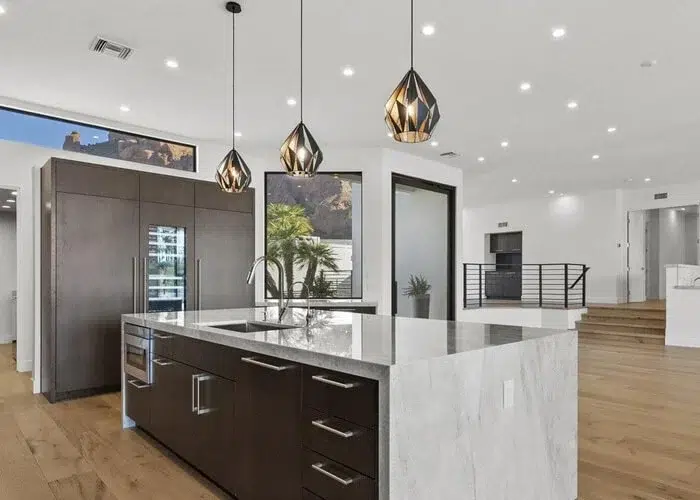
Of everything in a kitchen, the floor is the element you are least likely to replace. It runs into adjoining rooms, it sits under the appliances, and pulling it up turns a cabinet project into a construction project. So when clients ask which cabinet colour to choose, our first question is always about what is already on the floor.
Start with the undertone, not the colour
Most flooring reads as warm, cool or neutral long before it reads as light or dark. A red oak floor carries an orange undertone. A white oak floor with a natural finish is closer to neutral. Grey-washed and many porcelain tile floors read cool. Hold a cabinet door sample flat on the floor in daylight and the undertone becomes obvious in a way it never is in a photograph.
Match the undertone, contrast the value
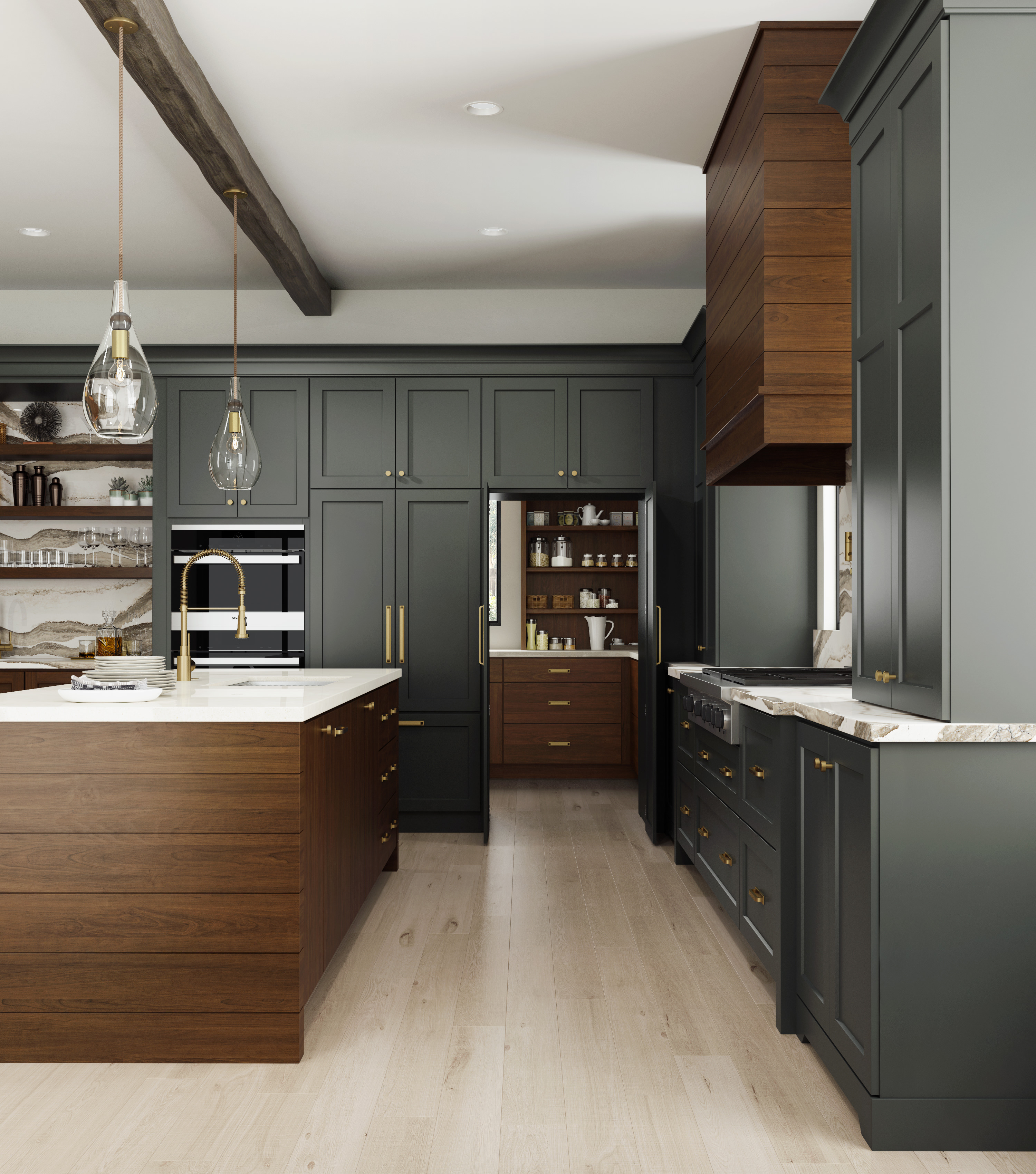
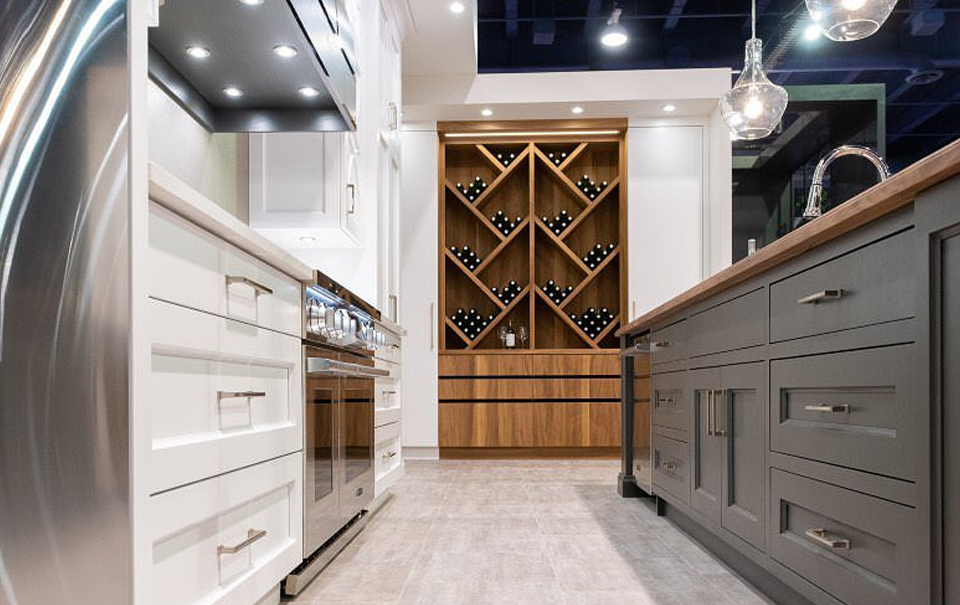
The combination that consistently works is a cabinet finish sharing the floor's undertone but sitting well away from it in lightness. Warm mid-tone floor, warm off-white cabinetry. Cool grey floor, cool white or a deep charcoal. Problems start when the two are close in value but different in undertone, because then they look like a near miss rather than a decision.
Give the island a different job
If you want a second colour, the island is where to spend it. A darker or warmer island against lighter perimeter cabinetry adds depth without committing the whole room, and it gives you somewhere to bring in a wood tone that echoes the floor without matching it.
Look at it in your own light
Arizona daylight is unforgiving and it changes what a finish does. This is why we ask clients to take samples home rather than deciding in the showroom alone. Put the door on the floor, look at it in the morning, look at it again under the lights you actually use at night, and only then make the call.