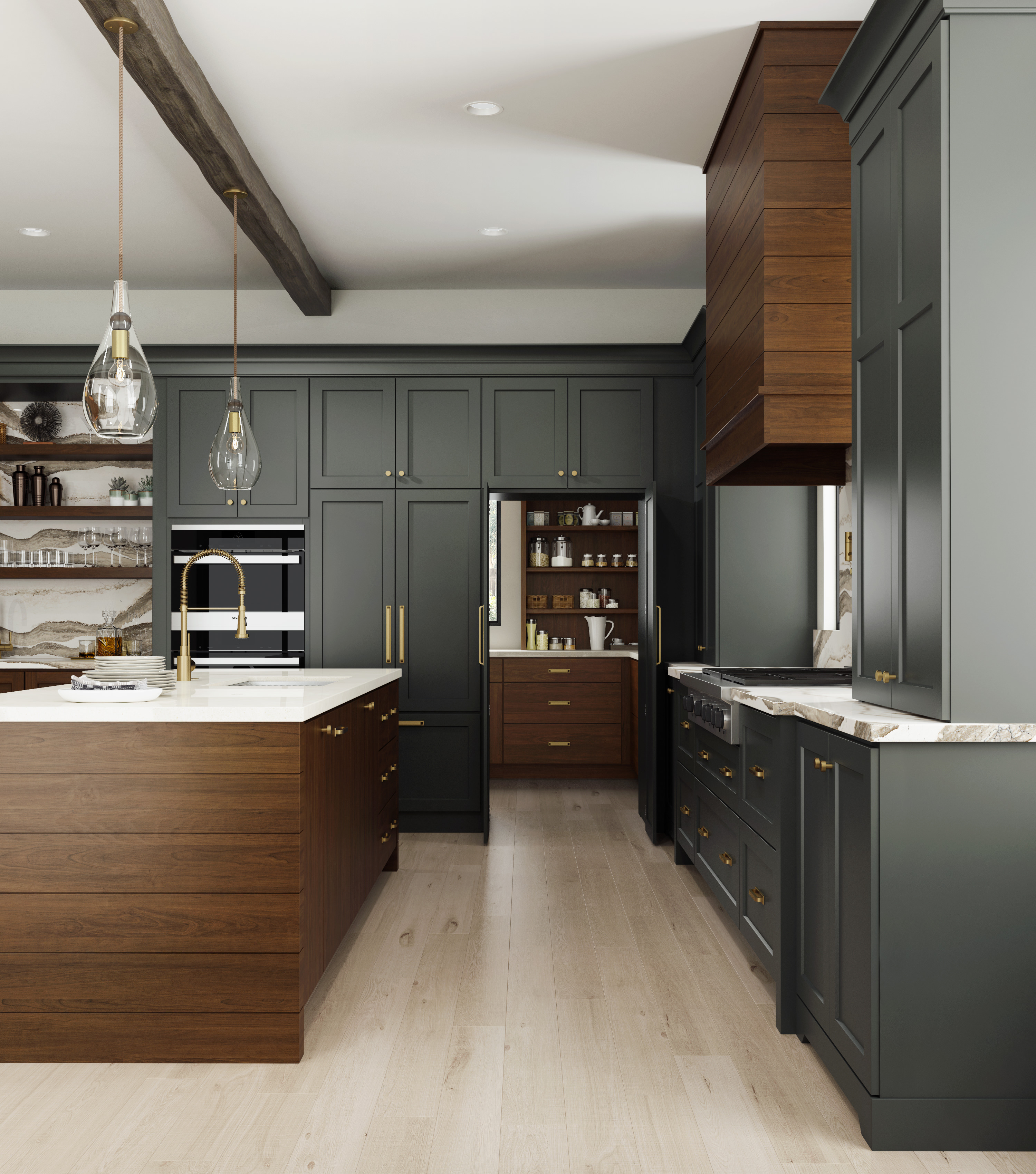
Dogs and cats spend more time at cabinet-door height than anyone else in the house. If you have pets, the lower cabinets take a specific kind of wear that never shows up in a showroom display, and it is worth planning for at specification rather than discovering later.
The finishes that hold up
Thermally fused laminate and high pressure laminate are the most scratch resistant surfaces we carry, and they clean up without marking. Conversion varnish over a stained hardwood is also very tough. Painted finishes look superb but show scuffs at toe-kick height sooner than anything else, particularly in darker colours.
Texture hides what smooth reveals
A textured or matte surface disguises minor scratching far better than a high-gloss one. Gloss acrylic is beautiful and genuinely durable, but every mark on it catches the light. If you have a large dog and you want gloss, put it on the uppers and something tougher below.
Watch the toe kick and the ends
The two places that fail first are the toe kick and the exposed end panel nearest the door pets use. A matching laminate toe kick instead of a painted one costs very little and takes the abuse. On end panels, a slightly deeper colour is more forgiving than an off-white.
Build the pet things in
While you are planning, it is the right moment to design in a feeding station in a toe-kick drawer, a pull-out for food storage, or a tucked-away crate space in an island. Done at the cabinet stage these cost far less than they look, and they keep bowls off the floor where they get kicked.